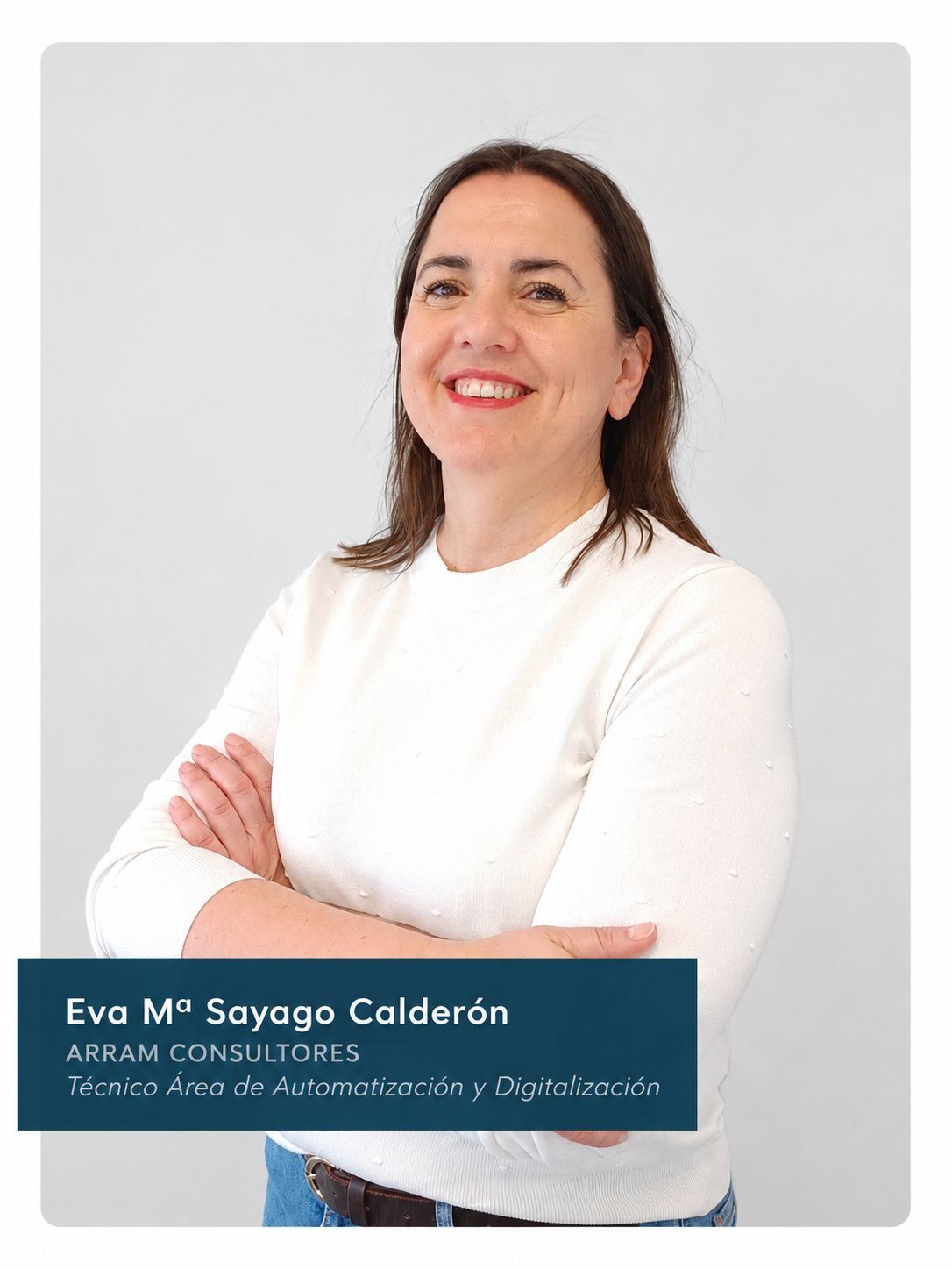
We are pleased to share the interview with Eva Mª Sayago Calderón, Automation and Digitalization Specialist at Arram Consultores, recently published in the autumn edition of Caudal Extremadura magazine.
To begin with, how would you define ARRAM Nexum in a few words?
ARRAM Nexum is a production flow manager based on digital twin technology. It enables modelling, simulation, planning, and monitoring of production processes in a virtual environment before making any changes to the actual plant. Essentially, it is a tool for designing the future production, rather than waiting for it to happen.
Factories already have MES systems, ERPs, and planning tools. What does ARRAM Nexum offer that isn’t already available?
The difference is clear: ARRAM Nexum allows you to experiment without touching the factory. Traditional systems manage production as it happens; ARRAM Nexum allows you to test how it should happen.
With this platform, you can create a virtual model of your process, simulate different scenarios, and identify bottlenecks, inefficiencies, staffing requirements, or sequencing issues before they arise in reality. This reduces risk, avoids unnecessary investment and improves decision-making.
What are Nexum’s main functions?
ARRAM Nexum operates based on four main modules:
-
Production process modelling. It creates a logical and visual representation of the flow, including machines, routes, buffers, timings, operators, shifts, and more. Everything is defined within a digital twin.
-
Scenario simulation. This is where the magic happens. The system runs the process in a virtual environment and allows you to evaluate alternatives: layout changes, new machinery, variations in cycle times, order sequencing, demand peaks, or incidents. The simulation reveals actual bottlenecks, not just the intuitive ones.
-
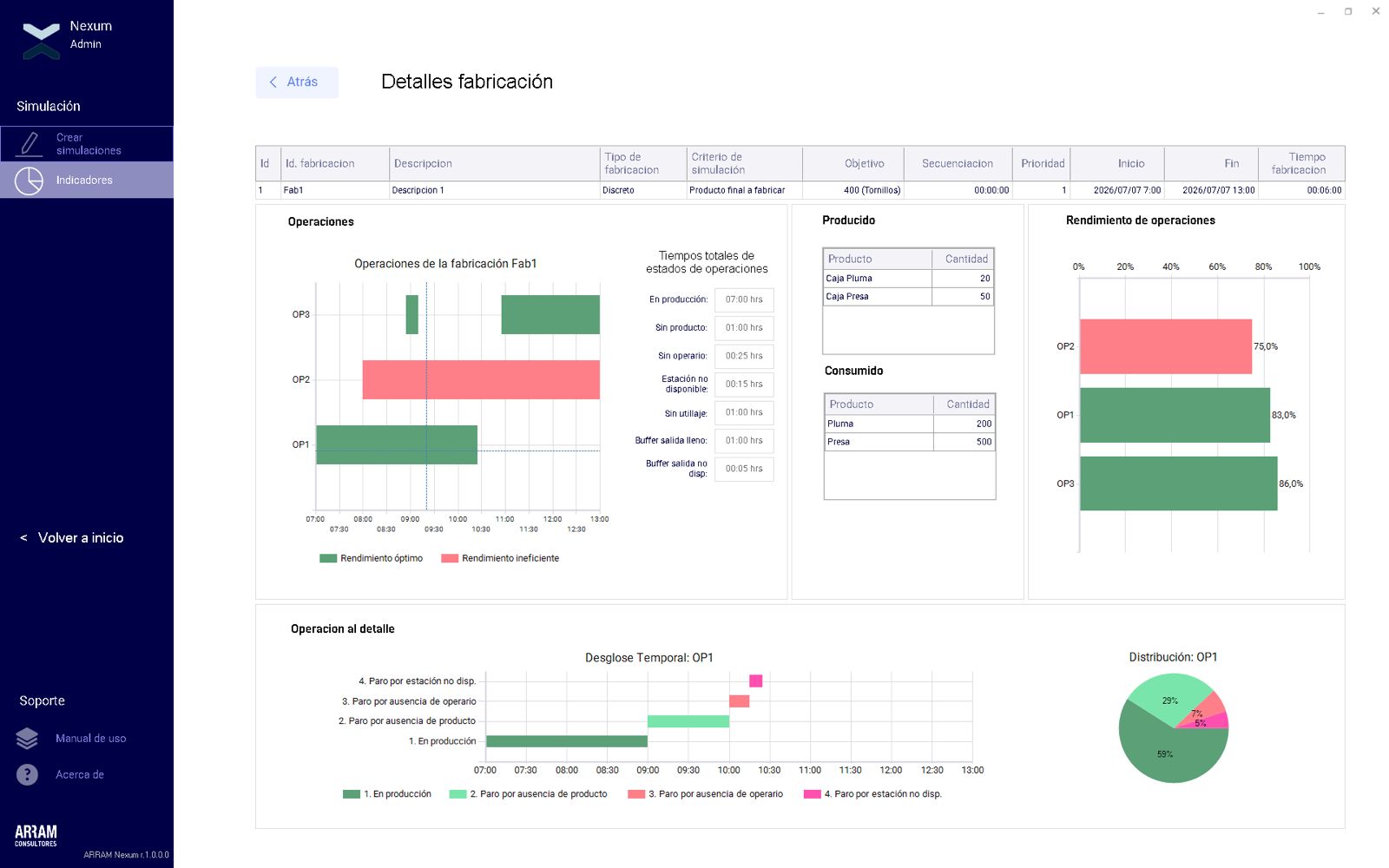
Production planning. ARRAM Nexum incorporates a planner based on Gantt charts, which organises operations to minimise downtime, machine changeovers, and displacement. It also manages inventory and anticipates potential delays.
-
Production monitoring. Once the process is underway, ARRAM Nexum allows it to be compared with the theoretical model. The digital twin shows what should be happening: expected output, estimated resource usage, standard times... This makes it easier to detect deviations before they affect the customer.
What technology underpins ARRAM Nexum?
ARRAM Nexum is based on a hybrid architecture that combines flowchart design, a simulation engine, 3D modelling, and data management.
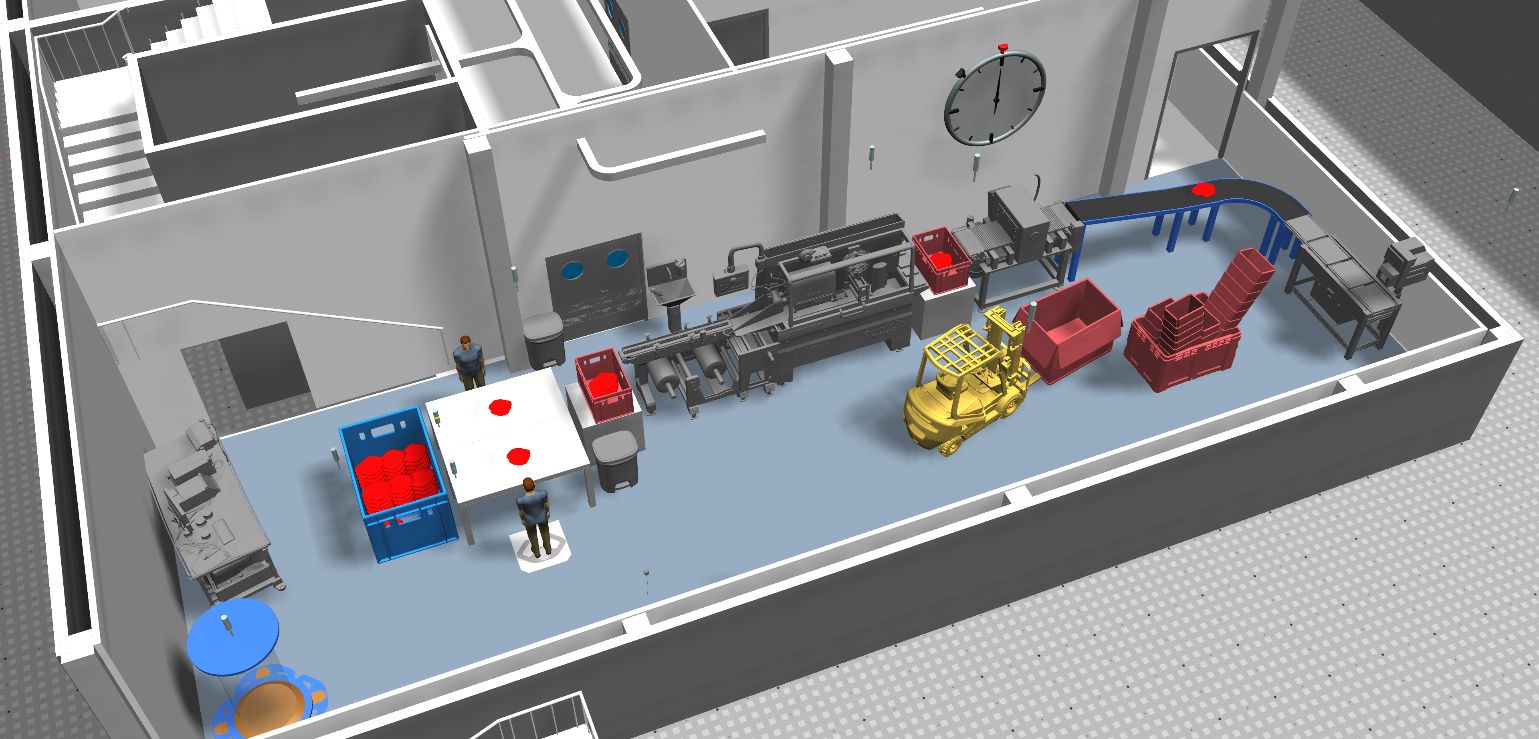
The digital twin is constructed using real process parameters: cycle times, capacities, routes, operators, shifts, and constraints. This ensures that simulations are not mere approximations, but faithful representations of how the factory operates. In addition, the platform incorporates 3D models that make production flows easier to understand visually.
What types of companies or professional profiles benefit most from this technology?
ARRAM Nexum is designed for sequential processes, covering both continuous and discrete manufacturing processes, with particular benefits in environments where operators play a significant role.
It is especially useful for production managers, plant managers, industrial planning teams, operations managers, and continuous improvement departments. Generally speaking, any organisation seeking order, predictability, and efficiency in its production flow.
Let’s talk about value. What sets ARRAM Nexum apart from other tools on the market?
Our competitive advantage is based on three pillars:
1. Creation of production process flowcharts.
This software allows you to create products, define machinery, size buffers, and design different production flows represented in different layouts.
2. Advanced simulation with a digital twin.
The platform allows users to visualise the process in 3D, see how operators move, how products flow, and how machine states change.
This facilitates communication between engineering, production, and management: everyone talks about the same model, rather than different interpretations. Furthermore, it allows users to test “what if…” scenarios without risk.
3. Virtual monitoring.
The digital twin acts as a script of what should be happening. If reality deviates from this, ARRAM Nexum highlights it (unexpected stoppages, material shortages, high scrap levels, times outside standard parameters, overloaded resources...).
This makes production more controlled and predictable.
If a company started using Nexum tomorrow, what improvements would it notice first?
Typically, three immediate benefits:
-
Full visibility of the workflow. The digital model allows you to identify redundancies, unnecessary movement, and areas of congestion.
-
Better decision-making. Simulations enable you to assess changes before implementing them: new machines, additional shifts, automation, smaller batches…
-
Reduced waste and downtime. By optimising routes, resources and sequences, efficiency naturally increases.
In addition, ARRAM Nexum helps measure the impact on key KPIs: OEE, resource utilisation, stock levels, WIP, waiting times... And it reduces investment risks by preventing spending on solutions that won’t solve the actual problem.
Planning is often a headache in many factories. What does ARRAM Nexum bring to this area?
A great deal. The planner generates a clear, visual Gantt chart, which makes the sequence of operations easier to understand. It helps anticipate potential delays, improve set-up times, and manage urgent orders more effectively.
In short, it turns planning into an organised, transparent, and efficient process.
How is ARRAM Nexum used once production is under way?
The digital twin acts as a theoretical mirror. It shows:
-
What should be being produced;
-
On which machine;
-
How many units should have been manufactured;
-
Which resources should be active;
-
Which timings should be met.
When reality deviates from this, ARRAM Nexum enables you to detect it. This allows you to correct the issue before it escalates.
Can you share a typical use case?
A very common case involves companies experiencing congestion on certain machines. With Nexum, they can simulate alternatives: adding buffers, reorganising routes, changing shifts, or introducing automation.
Another frequent case is planning for peaks in demand: the digital twin allows different scenarios and choose the most efficient one.
It is also useful for companies assessing potential investments; thanks to simulation, they can check whether a new machine will actually solve the problem or whether there’s a more cost-effective alternative.
Beyond the technology, what changes within the organisation?
It changes the way people work. ARRAM Nexum introduces a culture of decision-making based on data, not on intuition. Teams collaborate using a common model, communication improves, and the factory becomes more predictable.
It also reduces uncertainty: managers know what will happen, when, and why.
What does Nexum represent for the industry?
It represents a paradigm shift. For decades, factories have reacted to problems only once they were already occurring. With Nexum, industry can anticipate, experiment, and make decisions with confidence
It is a tool that makes advanced simulation more accessible, enabling any company, regardless of size, to design the production of the future.
If you had to define ARRAM Nexum in a single idea, what would it be?
ARRAM Nexum is the tool that enables companies to envision, simulate, and build better production environments. It is the bridge between what a factory is today and what it could become tomorrow.